 infantis
Post-discharge continuity
Help families organise important information after discharge and prepare for scheduled postnatal, newborn and child health visits.
Infantis Enterprise helps health institutions connect family-held health information, community and facility-based follow-up, and programme-level intelligence.
The platform supports families, community health workers, health professionals and programme managers within one configurable environment. It is designed to strengthen existing services and connect with established health information systems.
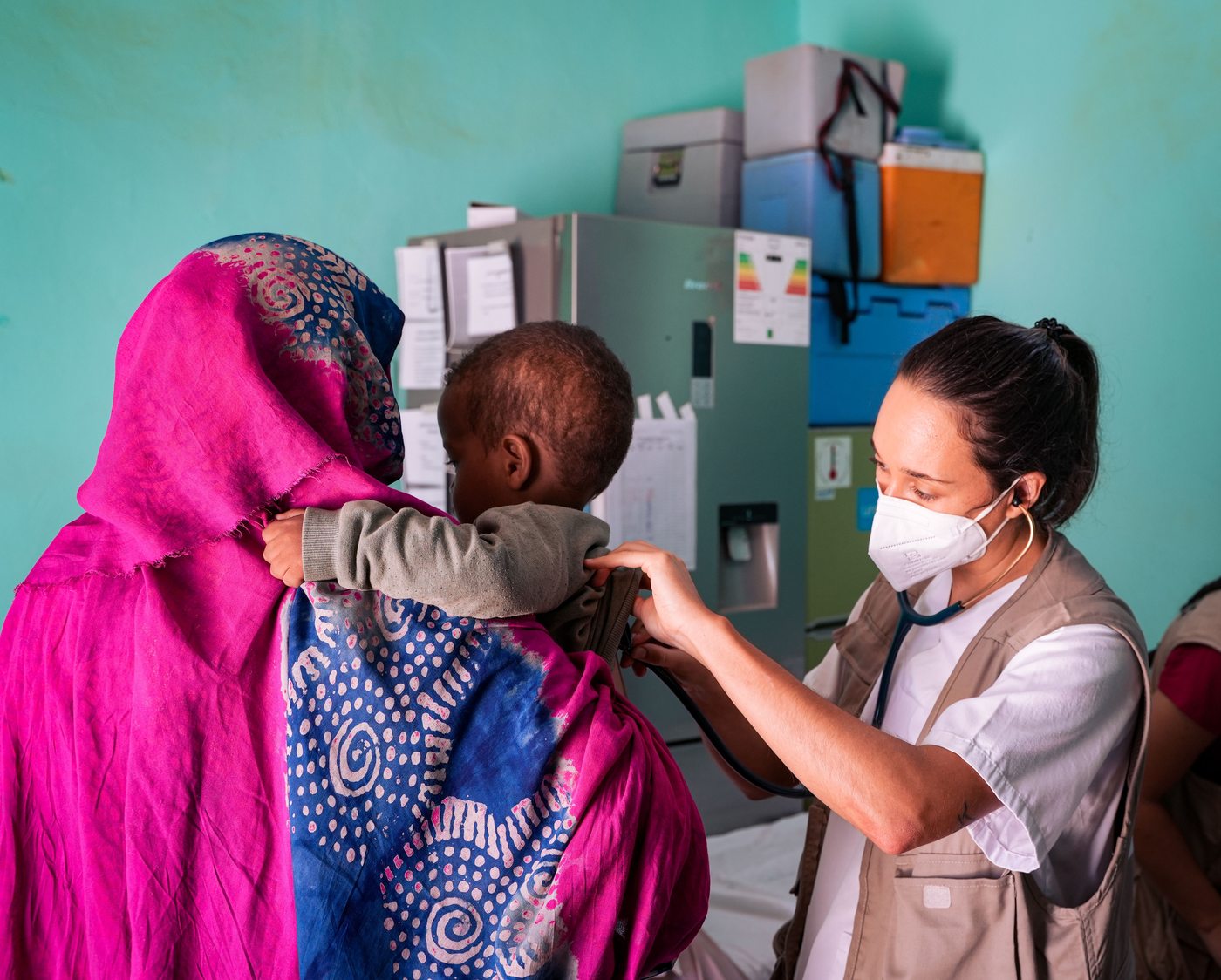
Health institutions often have limited information about what happens after a family leaves a facility. Important observations remain at home, community health workers manage growing caseloads, and programme managers may receive information too late to support timely follow-up.
Records can also become fragmented when families move between community services, clinics, hospitals and different administrative areas.
Infantis Enterprise creates a more continuous information pathway between families, health workers and institutions while keeping the needs and rights of families at the centre.
Help families organise important information after discharge and prepare for scheduled postnatal, newborn and child health visits.
Provide community health workers with role-appropriate tools for caseload organisation, household follow-up, referrals and offline field use.
Enable authorised health professionals to review structured summaries of family-recorded information, recent observations and relevant health history.
Support continuity when children move between caregivers, facilities, districts or countries through a caregiver-managed digital health passport and exportable summaries.
Provide programme managers with timely, appropriate indicators across populations, service locations and implementation teams.
Support structured monitoring, implementation research and programme evaluation using consented and appropriately governed data.

Infantis28 helps caregivers organise everyday observations, immunisations, growth, medicines, appointments, health documents and other important information.
A role-appropriate experience supports household follow-up, caseload continuity, scheduled contacts and communication with participating facilities and programmes.
Structured summaries can help authorised providers understand what has happened between health visits and prepare for more informed conversations with families.
Configurable dashboards and reporting tools provide appropriate visibility into service delivery, follow-up, implementation and programme performance.
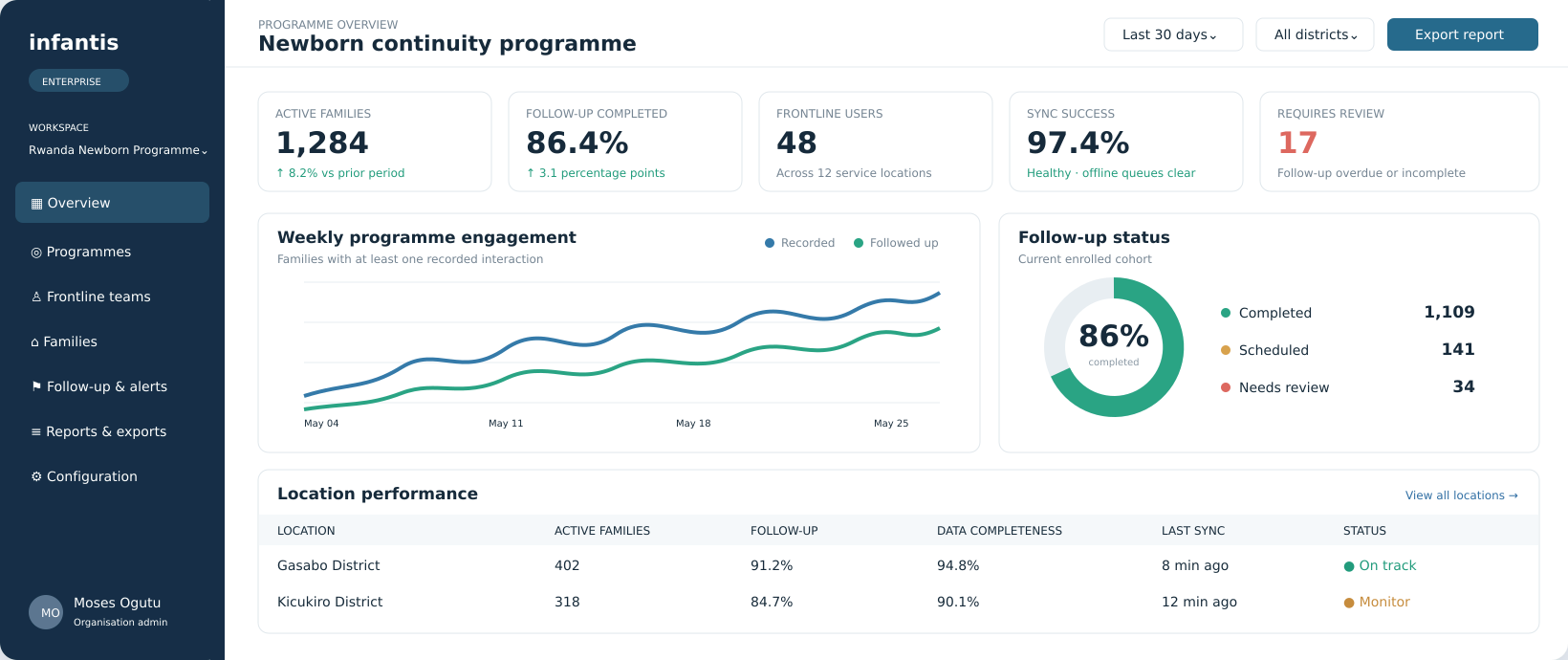
Infantis Enterprise dashboards give programme managers timely, appropriate indicators across populations, service locations and implementation teams — including follow-up rates, sync status and location performance.
The Infantis28 Digital Child Health Passport gives families an organised record of immunisations, growth, medicines, appointments, health visits and supporting documents.
When appropriately authorised, this information can support communication between families and participating health providers. Exportable summaries can also help preserve continuity when a child changes facilities, travels or receives services in another health system.
The Digital Child Health Passport complements official records maintained by health institutions. It does not replace national records, facility records or the professional judgement of health workers.

Support household follow-up, referral pathways, caseload management and offline use by community health workers.
Strengthen discharge planning, postnatal follow-up, communication with families and preparation for return visits.
Support programme oversight, service-delivery monitoring and appropriate reporting across facilities, districts and regions.
Configure workflows, user roles, languages and reporting requirements for specific programmes and populations.
Support consented implementation research, structured data collection and evidence generation within an agreed governance framework.
Core functions remain available when internet access is limited, with secure synchronisation when connectivity returns.
Permissions can be configured for families, community health workers, health professionals, supervisors, programme managers and system administrators.
Languages, health schedules, user roles, programme pathways, forms and reporting requirements can be adapted to the implementation context.
Configurable dashboards can support follow-up monitoring, service-delivery indicators, programme learning and management decisions.
Authorised users can access reports and structured exports based on programme requirements and applicable data-governance rules.
Deployments can include programme design, workflow configuration, user preparation, training, technical support, monitoring and evaluation.
Infantis Enterprise is designed to complement existing digital health infrastructure. It can support standards-based data exchange, structured reporting and integration pathways for national health information systems, facility systems and approved partner platforms.
The specific integration model is agreed with each institution based on its existing systems, governance requirements, infrastructure and implementation context.
The platform supports:
Infantis Enterprise is designed around privacy, security, accountability and appropriate institutional control.
Deployment configurations can include:
For institutional deployments, the responsibilities of the institution, implementing partners and Infantis are documented according to the applicable operating model. Depending on the programme, the institution may act as the data controller while Infantis provides services as a data processor.
Health data requirements differ across countries and institutions. Each Infantis Enterprise deployment is therefore reviewed against the relevant legal, ethical, clinical and institutional requirements before implementation.
This may include requirements arising under national data-protection and digital-health frameworks, as well as internationally recognised frameworks such as the GDPR or HIPAA where they apply.
Any required security assessment, ethics approval, data-protection impact assessment, institutional review or contractual safeguard is agreed as part of deployment planning.
Infantis technologies support observation, organisation, communication and programme intelligence. They do not replace qualified health professionals or institutional clinical protocols.
Where artificial intelligence is used, it is applied within defined purposes, access controls and safety boundaries. AI-supported outputs are designed to assist users with information and organisation rather than provide autonomous diagnosis or treatment decisions.
Institutions can review the proposed use of artificial intelligence, data sources, user responsibilities and monitoring arrangements during deployment design.
Define the target population, health programme, service pathway, operating environment, institutional systems and intended outcomes.
Adapt languages, roles, permissions, workflows, indicators, reporting and integration requirements to the programme context.
Prepare users, governance arrangements, technical infrastructure, training, operational support and monitoring processes.
Assess usability, adoption, follow-up, service-delivery value and implementation outcomes, then use the evidence to strengthen delivery.
Expand across facilities, districts or programmes when the implementation evidence, infrastructure and institutional readiness support it.
Infantis works with ministries, hospitals, clinics, community health programmes, NGOs, research institutions, funders and implementing organisations.
Engagements may include:
Tell us about the population you serve, the services you provide, the systems you already use and the continuity challenges you want to address. We can assess the appropriate deployment, governance and integration pathway with your institution.
Contact: partners@infantis28.org