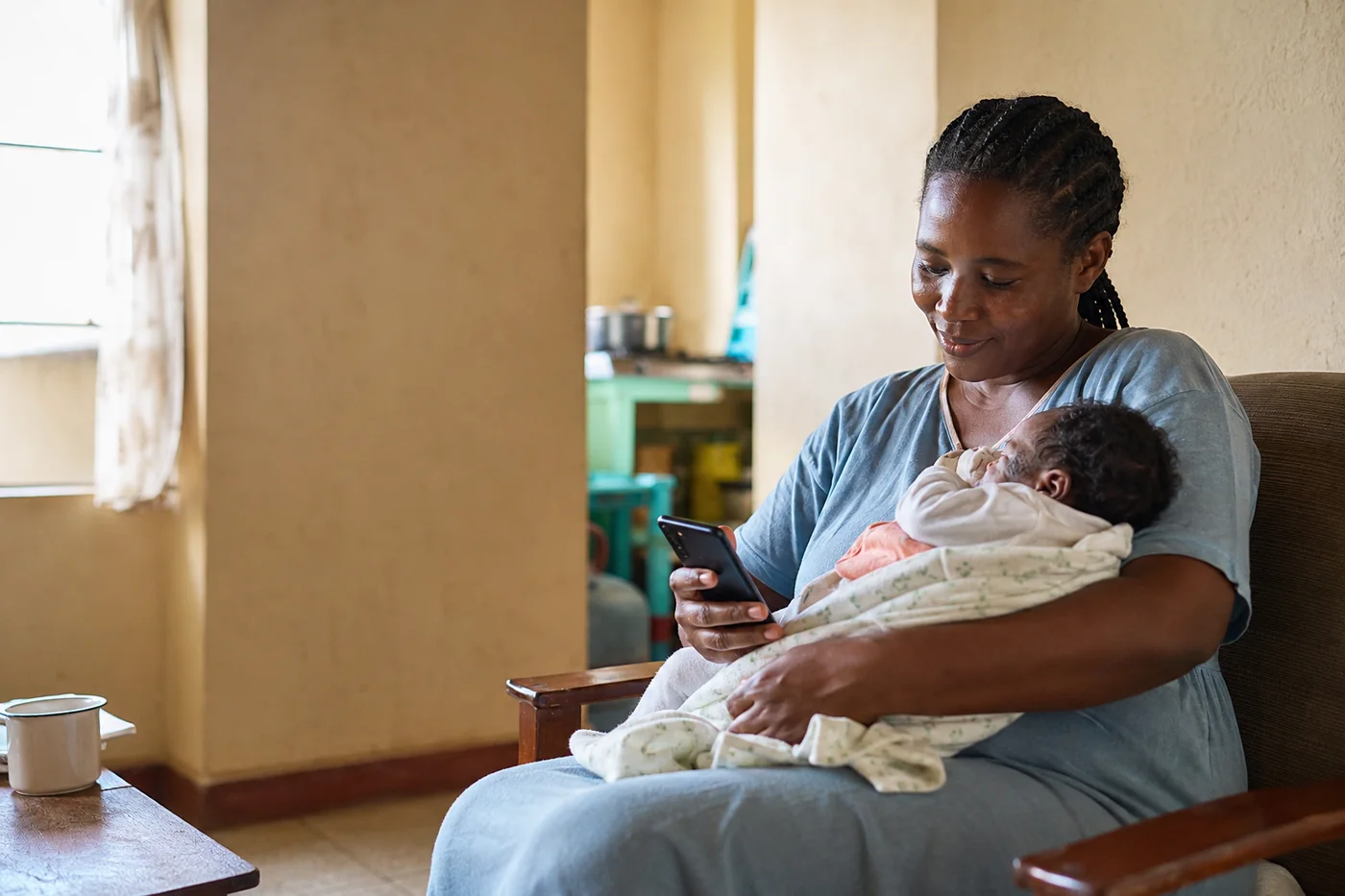
Neonatal Survival System

The first 28 days
decide everything.

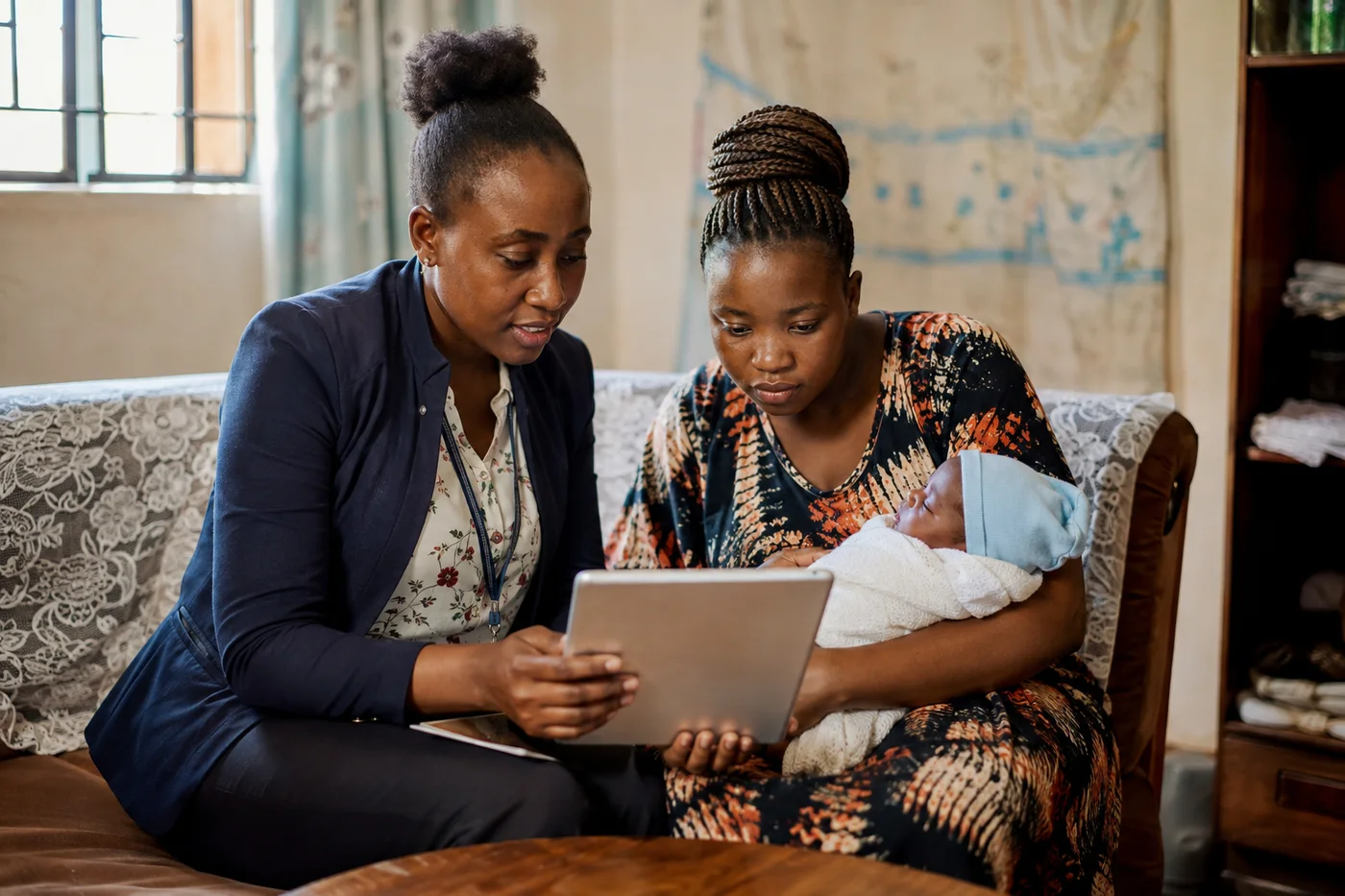
Infantis 28 is a caregiver-centered neonatal care and observation system designed for the first 28 days of life — the most critical and underserved window in a newborn's survival.

2.3M
newborn deaths every year worldwide
WHO/UNICEF, 2023
75%
occur in the first seven days of life
WHO, 2024
Vast majority
of neonatal deaths occur in low and middle-income countries
WHO, 2024
28
days — the neonatal window Infantis 28 protects
WHO neonatal period definition
Why Infantis 28

A gap hiding in plain sight.

Once a mother and baby leave the health facility, the health system loses visibility entirely. Infantis 28 changes what is visible — and prevention begins with visibility.

01
The Challenge

2.3 million lives lost in the first 28 days

Almost all in low and middle-income countries. Almost all preventable. Danger signs missed too late. No system watching when the health system cannot see.

Read the full picture →
02
The Opportunity

The window is now open.

For the first time, advances in mobile technology and connectivity across low-resource settings make structured home-based neonatal observation possible at scale. SDG 3.2 is off-track. Funders are actively seeking community-level solutions. No system like this exists yet.

See the evidence case →
03
The Solution

A system that sees what the health system cannot.

Infantis 28 integrates a digital tracking app, a clinically-aligned physical kit, and AI-assisted pattern recognition — generating structured data from the community neonatal period for the first time.

Explore the system →
What We Build

Three components. One system.

📱

The App

AI-assisted pattern recognition, tiered escalation guidance, and clinic-ready visit summaries. Works fully offline. Built for low-literacy caregivers.

MVP ready for pilot deployment
📦

The Kit

A clinically-aligned physical care package. Thermometer, danger signs cards, cord care, newborn essentials. Proof of concept assembled. Full kit in development.

Pilot distribution in development
🌿

The Nest

A safe-sleep unit that doubles as the kit container — addressing unsafe sleep surfaces directly. Concept fully designed. Prototype in development.

Prototype in development
Where We Work

Built for the world's highest-burden neonatal contexts.

Infantis 28 targets Sub-Saharan Africa, South Asia, Latin America, and the Caribbean — where neonatal mortality remains highest and health system visibility after birth is lowest. The architecture is configurable: country-specific immunisation schedules, regional clinical guidelines, and modular language support.

Infantis 28 is actively seeking pilot partners — Ministries of Health, NGOs, and donor-funded programmes — beginning in Africa, with a platform built to scale globally.

Sub-Saharan Africa
Highest absolute burden · Priority pilot
South Asia
Largest birth cohort globally
Latin America
Urban poor + growing middle class
Caribbean
Diaspora connectivity · Priority pilot
Join Us

Ready to change what is visible?

We are seeking institutional partners, NGO distributors, clinical advisors, and donors who share the mission of neonatal survival at scale.

Our Story

Born from lived experience.
Built from a decade of global health practice.

Infantis 28 began not in a boardroom, but in a hospital ward in Washington DC — and in a memory of a village clinic run in Kenya that was too far, too late.

Founder
Moses O. Ogutu
Mandela Rhodes Scholar · Bertha Centre Scholar · Dalai Lama Fellow
Moses O. Ogutu
Founder & Executive Director

Every year, 2.3 million babies die in their first 28 days—almost all of them in places where, the moment a mother and newborn leave a health facility, no one is watching.

I have spent over a decade working on the kinds of systems designed to close gaps like this—across international development, trade, and science and innovation, moving between research, teaching, and implementation, and working with institutions such as the United Nations, the African Union, and the U.S. National Academies of Sciences, Engineering, and Medicine, as well as the InterAcademy Partnership.

I have studied social innovation and entrepreneurial leadership, and the deeper question of why well-intentioned systems so often fail to reach the people who need them most. But I came to understand this particular gap in a different way—the way you only do when it becomes personal.

When my twins were born in Washington, DC, I found myself awake at 3 a.m., recording feeds, temperatures, and diaper counts in a notebook—exhausted, overwhelmed, and trying to answer doctors' questions correctly at every visit. Somewhere in those first weeks, I thought: there has to be a better way to do this.

And then my mind went elsewhere—to my mother in Kenya, to the home I grew up in, to the women I had met across Sub-Saharan Africa and the Caribbean, and to my younger brothers. I remembered a night in our village when one of them fell seriously ill—the clinic was far, and I was the one at home caring for him while my mother worked late at the market.

Then one night, our son William developed a high fever. Because we had a thermometer—because we had been tracking his temperature—we recognized it in time. The ER doctors told us we had arrived just in time. It still took hours to stabilize him.

I sat in that waiting room, unable to stop thinking about what that night would have looked like somewhere else—for someone without the tools, without any consistent system to help them know, day by day, whether what they were seeing was normal or dangerous.

That gap—between knowing and not knowing, between early action and delayed response—is not just a technical problem. It is a structural one, and ultimately a human one.

Master of Philosophy, Inclusive Innovation — University of Cape Town, Graduate School of Business MA International Relations — University of Cape Town PhD Candidate — Maxwell School of Citizenship and Public Affairs, Syracuse University The National Academies of Sciences, Engineering & Medicine InterAcademy Partnership Mandela Rhodes Scholar 2017 Bertha Scholar — Bertha Centre for Social Innovation & Entrepreneurship Dalai Lama Fellow 2019 Lived & worked across 5 continents
The Team

The people behind the system.

Infantis 28 brings together expertise in global health policy, healthcare analytics, digital health, inclusive innovation, and institutional partnerships across Africa.

Moses O. Ogutu
Moses O. Ogutu
Founder & Executive Director
International development professional with 10+ years across global health policy, science diplomacy, and social innovation. PhD candidate, Maxwell School, Syracuse University. Former Associate Programme Officer, The National Academies of Sciences, Engineering & Medicine. Mandela Rhodes Scholar.
Evangeline McDonald
Evangeline McDonald, MPH
Co-Founder & Head of Data Analytics
Healthcare analytics leader with 10+ years designing evidence-based data solutions across public health, clinical operations, and social impact contexts. Deep expertise in predictive analytics, data governance, and social determinants of health. MPH, Brown University.
Wanjiru Mburu
Wanjiru Mburu, PhD
Digital Health Advisor
Digital health researcher and human-computer interaction specialist with 10+ years designing technology interventions for health across Africa. PhD in Computer Science, University of Cape Town. Research focused on ICT support systems for mothers of preterm infants. Former roles at the Bill & Melinda Gates Foundation, Microsoft, and Medic Mobile. Based in Kenya.
Paul Ruhamya
Paul Ruhamya
Rwanda Partnerships Lead
Governance and institutional partnerships specialist with 13+ years in public-sector coordination, investment facilitation, and donor-funded programme delivery in Rwanda. Former roles at the Rwanda Development Board and USAID/Rwanda, including work spanning health sector investment and government institutional coordination. Based in Kigali.
We Are Hiring

We are building something that matters.

A mobile developer, a clinical advisor, field research interns in East and Southern Africa, and a grants intern. If you want to build with us — we want to hear from you.

Mission

We are building a system — not just an app.

Infantis 28 is a neonatal survival platform that works where neonatal survival is most uncertain, generates the evidence needed to prove what works, and creates the data layer that has never existed at the community level before.

The Challenge

The most dangerous journey begins at birth.

The first 28 days of life — the neonatal period — account for the highest risk of infant mortality. Every year, 2.3 million babies die in this window, almost all in places where the health system has no visibility after birth.

2.3M
neonatal deaths per year globally
WHO/UNICEF, 2023
75%
occur in the first 7 days of life
WHO, 2024
14×
a baby in Sub-Saharan Africa is 14 times more likely to die in the first month than one born in a high-income country
WHO, 2023
Root Causes

Most neonatal deaths are preventable.

They are caused by failures of recognition, response, and reach — all addressable at the community level with the right system in place.

Danger signs recognized too late

Fast breathing, abnormal temperature, poor feeding, lethargy — these are recognizable. Without a structured observation system, they are frequently missed until the window for intervention has closed.

Feeding problems identified after damage is done

Inadequate feeding leads rapidly to dehydration and failure to thrive. Without daily structured logging, subtle pattern changes go undetected until the baby is in crisis.

Hypothermia in settings without warmth guidance

Neonatal hypothermia is a major preventable killer, particularly for low birth weight babies. Simple, accessible thermoregulation guidance changes outcomes.

Infection from poor cord and hygiene practices

Omphalitis remains significant in home birth settings. Correct cord care guidance, delivered at the right moment, is simple, cheap, and highly effective.

Missed immunisations and postnatal visits

Early postnatal contact and timely immunisation are among the highest-impact interventions available. Reminder systems and structured visit tracking close this gap.

No safety net after facility discharge

The structural failure: once a mother and baby leave the facility, the health system loses visibility entirely. No structured home-based observation. No early warning. No data. This is where lives are lost.

"Once a mother and baby leave the health facility, the system loses visibility entirely. Infantis 28 changes what is visible — and prevention begins with visibility."

— Infantis 28 Product Philosophy
SDG Context

SDG 3.2 remains critically off-track.

The Sustainable Development Goals call for an end to preventable newborn deaths by 2030. Progress is insufficient. The gap is largest in Sub-Saharan Africa and South Asia — exactly where Infantis 28 is built to operate. Donors, governments, and multilaterals are actively seeking scalable, evidence-generating solutions at the community level.

The System

A neonatal survival system.
Not just an app.

Three integrated components — digital, physical, and data — designed to observe, detect, support caregivers, and generate evidence through the most dangerous 28 days of a newborn's life.

System Architecture

How the system fits together

Three components. One integrated platform. Each element connects to the others — the physical kit connects to the app, the app generates the data, the data feeds the institutional dashboard.

Caregiver Journey

From birth to Day 28

How Infantis 28 accompanies a caregiver and newborn through every stage of the neonatal period.

Innovation

Why this has not existed before — and why it works now.

Infantis 28 is not an adaptation of a high-income country product. It is built from the ground up for the contexts where neonatal mortality is highest — offline-first, low-literacy, low-bandwidth, and designed for the specific clinical realities of Sub-Saharan Africa, South Asia, Latin America, and the Caribbean.

First structured daily observation system for the community neonatal period — no equivalent exists at scale in low-resource settings.
Integrated digital and physical system — the app and kit are designed together. Every physical item connects to an app module via QR code.
Population-level data generation from the community neonatal period — creating an evidence layer that has never existed before for this window of life.
Configurable architecture — immunisation schedules, clinical guidelines, and language support configurable per country without rebuilding the app.
The Digital Platform

Infantis 28 App

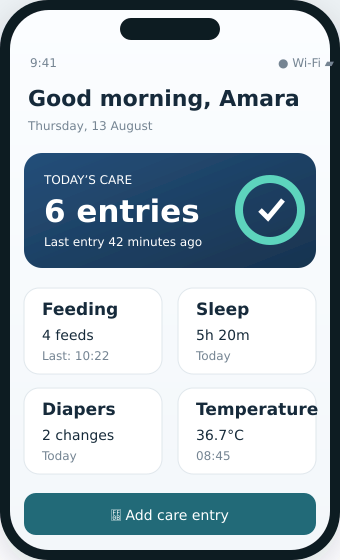
Structured daily observation, AI-assisted pattern recognition, and tiered escalation guidance — working fully offline, designed for low-literacy caregivers, syncing when connected. MVP ready for pilot deployment.

🍼

Feeding Module

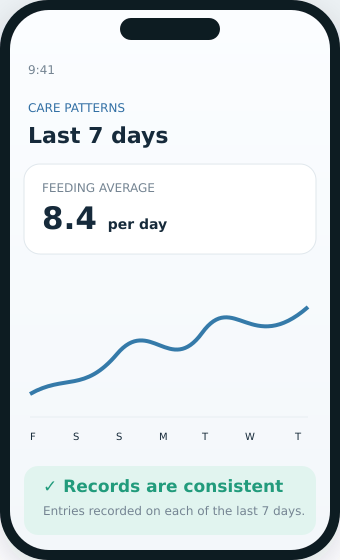
Log feeds with time and duration. Tracks rolling 24-hour summaries and compares against the baby's own baseline.

Connects to: Daily AI summary
💧

Diaper Module

Track wet and dirty diapers with 48-hour trend analysis — one of the earliest dehydration indicators.

Connects to: Escalation framework
🌡️

Temperature Module

Manual temperature entry with threshold flagging and trend tracking. Detects gradual changes before escalation level.

Connects to: Kit thermometer
😴

Sleep Module

Start/end sleep logging with daily totals and pattern shift detection against the baby's own baseline.

Pattern deviation alerts
💉

Immunisation Module

Automatic schedule loading by country and date of birth. Reminders, pre-visit checklists, post-visit logging. Country-configurable.

Country-configurable
👥

Multi-Caregiver Access

Primary caregiver invites a secondary — partner, grandparent, or CHW. Shared logs and summaries across caregivers.

Shared access
AI Layer

Pattern intelligence.
Controlled scope.

The AI layer operates on structured internal data only. It summarizes, detects deviations, and generates clinic-ready reports. It does not diagnose. It does not suggest medication. The line between observation support and clinical advice is enforced in architecture, not just policy.

Daily Summary
"Today feeding was consistent. Wet diapers were slightly fewer than yesterday. Temperature remained within normal range."
Pattern Alert
"Feeding frequency is lower than your recent pattern. Monitor closely and consider contacting a clinic if this continues."
Clinic Summary Export
One-page export: last 3 days of feeding, diaper trends, temperature log, immunisation status. Caregiver arrives at clinic with structured data.
Escalation Framework

Three tiers. No diagnosis. Always redirecting to care.

TierTriggerExample LanguageTone
Tier 1 — ReassurancePatterns within normal range"Feeding appears consistent with your recent pattern."Calm. Neutral.
Tier 2 — MonitorMild deviation detected"Feeding frequency is lower than your recent pattern. Monitor closely."Observational. Vigilance.
Tier 3 — Seek CareRule threshold or pattern combination triggered"This change may require medical attention. Please consider visiting your nearest clinic."Clear. Actionable. Never diagnostic.

Infantis 28 is not a diagnostic device. All escalation language uses "may" and "consider" — always redirecting to professional care, never replacing it.

The Physical Kit

Infantis 28 Newborn Kit

A purposeful neonatal support package — not a consumer baby product. Every item is clinically aligned and directly connected to an app tracking module. Proof of concept assembled. Full kit configuration in development for pilot distribution.

Core Kit Contents

What every kit includes

Digital thermometer (axillary-safe, newborn-appropriate)
Danger signs quick-reference card
Jaundice visual assessment guide
Daily symptom checklist — wipe-clean, low-literacy format
Feeding observation card with visual guides
Vitamin K reminder and verification card
Cord care supplies (region-specific)
Soft newborn cap, wrap, and scratch mitts
Nasal aspirator and saline drops
Weight tracking card with visual trajectory guide
QR code activation card linking kit to app
Enhanced items available for institutional pilot tiers
Prototype in Development

The Infantis Nest

A lightweight safe-sleep unit that doubles as the kit container. The Nest directly addresses unsafe sleep surfaces — a significant and preventable neonatal mortality driver across our target markets.

Concept fully designed. Physical prototype in development. Targeting pilot evaluation alongside the app and kit.

Safety Requirements
Firm, flat sleep surface — no softness or incline
Ventilated sides — minimum two opposing faces
Moisture-resistant for humid tropical climates
Removable kit tray — storage separated from sleep zone
Clear lifespan marking — suitable for first 8 weeks
Full cleaning protocol for low-resource settings
For Partners

Built to work with the systems you've already built.

Infantis 28 is designed for institutional partnership. We understand procurement cycles, field realities, and the difference between what looks good in a proposal and what actually works.

Theory of Change

How Infantis 28 creates impact.

Our theory of change is grounded in a simple causal chain — from visibility to survival to evidence to scale.

👁️
Visibility
Daily structured observation creates visibility that did not exist
🔍
Detection
Pattern recognition detects danger signs before crisis
Early Action
Escalation guidance prompts timely care-seeking
👶
Survival
Preventable neonatal deaths are averted
📊
Evidence
Data proves what works — funding the next phase at scale
Distribution Model

Hybrid: Institutional + Consumer

Infantis 28 operates as a mission-driven social enterprise. Institutional partnerships enable distribution to vulnerable populations at or below cost, while complementary consumer access supports ongoing product development and long-term sustainability.

Institutional Channel

Program & Government Distribution

Primary pathway for early deployment, working with NGOs, government programs, and donor-funded initiatives to reach caregivers through existing health and community systems.

  • Designed for integration into CHW and facility-based delivery networks
  • Supports program-level visibility and reporting
  • Adaptable to regional and institutional contexts
  • Clinical advisory integration pathway
Consumer Channel

Direct Access

A complementary pathway that expands access among families who are able to purchase directly, while supporting continuous improvement of the platform.

  • Available through direct-to-consumer channels
  • Accessible to families seeking structured neonatal support
  • Helps sustain access for vulnerable populations
Institutional Dashboard

Program-level visibility.
No identifiable data.

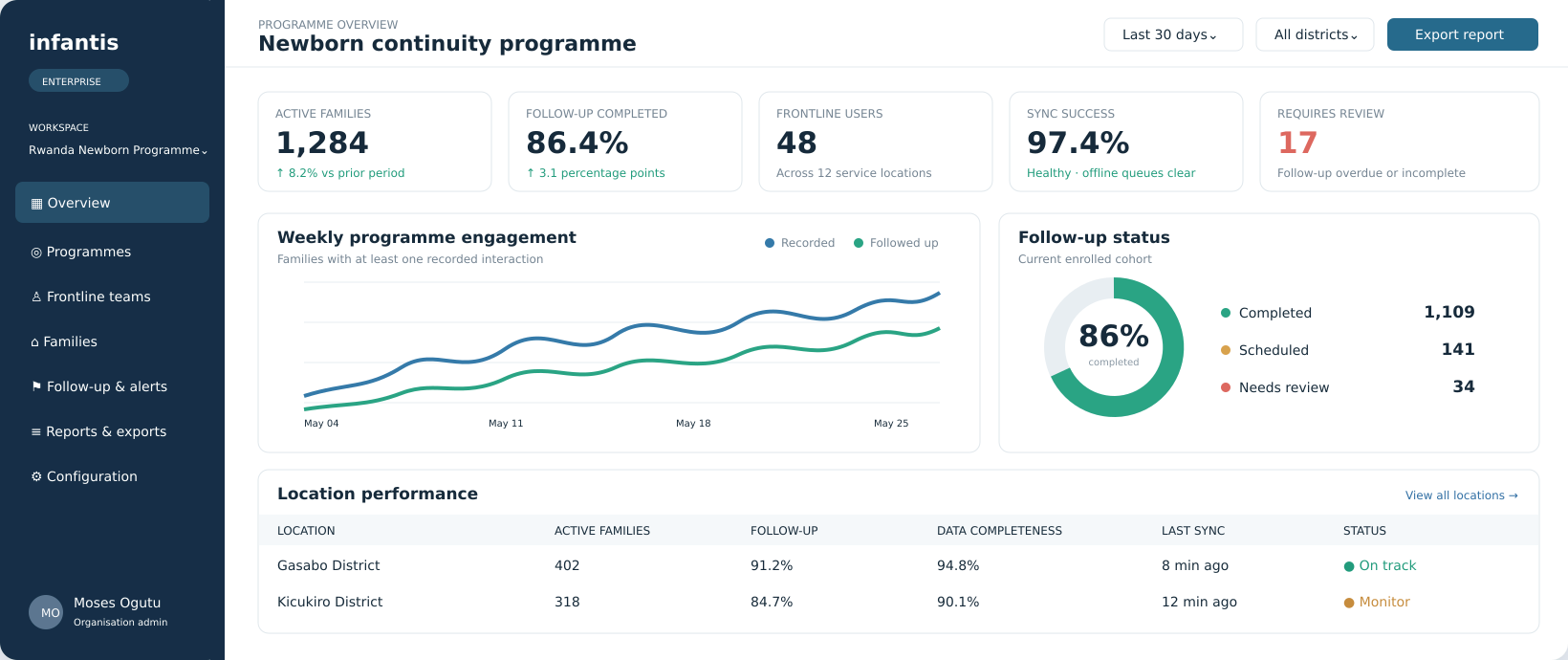
The Infantis 28 backend aggregates anonymised data across enrolled caregivers in real time. Program managers and grant reporting teams access population-level metrics without any identifiable individual data. For the first time, structured data from the community neonatal period is available — changing what you can report, prove, and fund.

Average daily feeds per cohort
8.4 / day
Immunisation adherence rate
87%
Tier 3 escalation events
3.2%
Clinic visits prompted by app
94%

Illustrative metrics. Pilot data collected in Phase 1 deployment.

Evidence Framework

What we are measuring in the pilot.

DAU
Daily active users over 28-day cohort — primary engagement metric
IAdh
Immunisation adherence delta — kit + app users vs. control group
EAcc
Escalation accuracy — Tier 3 events followed by clinic visit
Platform Roadmap

Infantis 28 is the first product of a broader platform.

Each product addresses a distinct window of the first 1,000 days of life.

Infantis 28 ACTIVE
First 28 days — neonatal care tracking and caregiver decision support. MVP approaching pilot deployment.
Infantis Maternal
Maternal postpartum recovery, mental health monitoring, breastfeeding support, and postnatal complication detection.
Infantis Year 1
Infant care from Day 29 through 12 months — continuing the structured observation framework beyond the neonatal period.
Infantis Connect
CHW supervision, training delivery, and telehealth integration layer — connecting the platform to community health systems at scale.
Get Involved

Let's talk about what's possible.

Whether you're a donor, an NGO, a clinical advisor, a developer, or a caregiver — there is a place for you in this work.

Send us a message

We respond to every message within 48 hours.

Thank you — message received.
We'll be in touch within 48 hours.

Join the waitlist

Be among the first to know when Infantis 28 launches in your region.

How to reach us

Use the right address for a faster, more informed response.

🤝
Partnership & Institutional
partners [at] infantis28.org
NGO procurement, government programs, donor conversations, pilot design
✉️
Direct Founder Contact
mogutu [at] infantis28.org
Moses Ogutu, Founder & Executive Director
Important Notice

Infantis 28 is currently seeking pilot partners. The app MVP is approaching deployment and the physical kit is in development. If you have a medical emergency involving a newborn, seek immediate professional medical care.

Join the Team

We are building Infantis 28.
Build it with us.

A small, focused team preparing for first pilot deployment in Africa. We are looking for people who want to work on something that matters.

Send applications to careers [at] infantis28.org
Open Role
Mobile Developer

We are building the Infantis 28 app — an offline-first mobile health application for caregivers of newborns in low-resource settings. We need a React Native developer who cares about building technology that works in the real world, not just on a fast connection.

React Native Offline-first Remote
Apply: careers [at] infantis28.org
Advisory Role
Clinical Advisor

We are seeking a neonatologist, pediatrician, or experienced midwife with LMIC experience to review our clinical escalation framework and danger signs language. A named advisory role — your expertise will help shape a system designed to protect newborns at scale.

Neonatology Pediatrics or Midwifery Advisory basis
Express interest: careers [at] infantis28.org
Internship — East Africa
Field Research Intern

Based in Kenya or Rwanda, supporting pilot preparation — building institutional relationships, coordinating community outreach, and supporting on-the-ground logistics. Ideal for a Masters student or recent graduate in public health or global development.

Kenya or Rwanda Masters level
Apply: careers [at] infantis28.org
Internship — Southern Africa
Field Research Intern

Based in South Africa, focused on building institutional relationships with the Western Cape Department of Health, academic partners at the University of Cape Town, and NGO networks as we scope our Southern Africa pilot pathway.

South Africa Masters level
Apply: careers [at] infantis28.org
Internship — Remote
Grants & Communications Intern

Support grant research and writing, partner communications, and content development. Ideal for someone with a background in global health, international development, or communications who wants hands-on experience with an early-stage health innovation initiative. Fully remote, flexible hours.

Remote Grant writing Masters level
Apply: careers [at] infantis28.org

Don't see your role here?

We are a growing team. If you are passionate about neonatal health, inclusive innovation, or building technology for low-resource settings — we want to hear from you.